Instructions
Pinto Beans with Hog Jowl Bacon
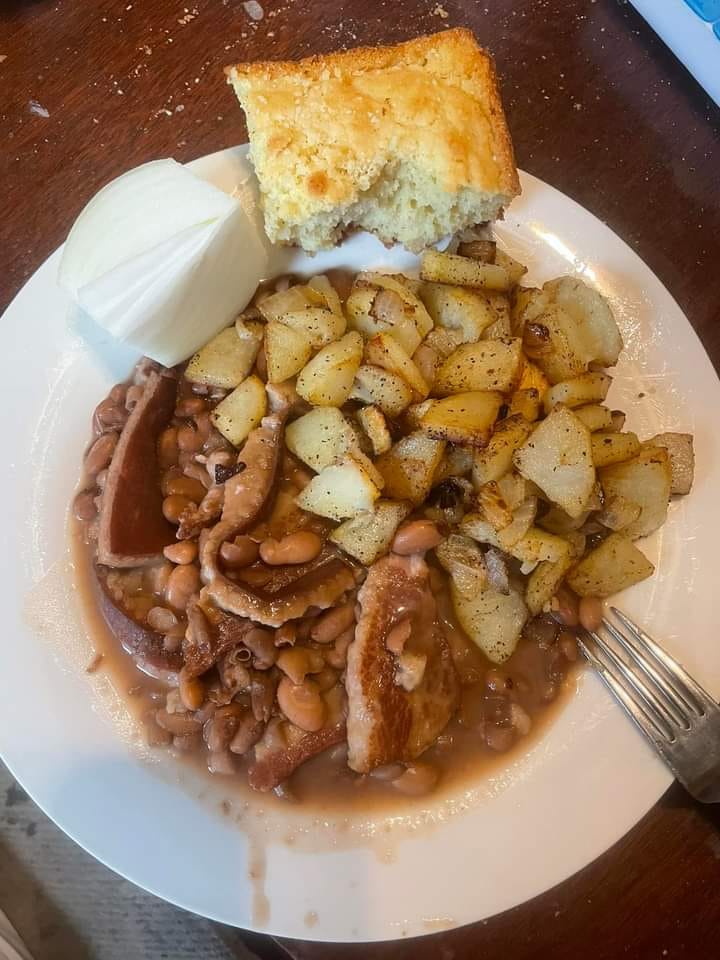
- Build your pot of beans. Start by getting your pinto beans into a good, sturdy pot, along with the hog jowl bacon. As the bacon cooks with the beans, the fat and flavor from the hog jowl slowly render out into the pot, giving the beans a deep, smoky richness. Make sure the beans are well covered with liquid so they have room to soften and soak up all that flavor as they cook.
- Cook the beans until tender. Let the beans simmer gently until they are cooked to perfection — that means tender all the way through, but not falling completely apart. You’ll know they’re ready when they hold their shape but easily give way when you bite into them. The broth should look slightly thickened and cloudy from the starch released by the beans, and you should see a light sheen on top from the rendered bacon.
- Let the flavors build over days. This pot is on its third day, which says a lot about how this kind of meal works. After the first day, let the beans cool down, then store them right in the same pot. Each time you reheat them, bring them back up to a gentle simmer so everything gets hot and the bacon has a chance to soften and share even more flavor. Over three days, the beans and bacon grow richer and more flavorful, and the broth becomes almost silky from all that slow cooking. Just be sure to keep an eye on the liquid level and add a bit more if the beans are looking too dry — you want them nice and saucy so you’ve got something for the cornbread to soak up.
- Check seasoning and texture before serving. Before you ladle the beans into bowls or onto plates, taste a couple of them and look at the broth. The beans should be soft and flavorful, the bacon should be tender, and the liquid should have plenty of body. Give the pot a gentle stir to mix in any bits that have settled at the bottom so every serving gets a good balance of beans, bacon, and broth.
Fried Taters with Onion
- Prepare the taters and onion. Slice your potatoes into even pieces — they can be rounds, half-moons, or chunks, as long as they’re roughly the same size so they cook at the same pace. Slice or chop the onion so it can cook right along with the taters. Keeping the pieces even helps you get that classic mix of tender centers and crisp edges.
- Start the taters in a good hot skillet. Put your taters into a hot skillet, spreading them out so they have as much contact with the surface as possible. This helps them brown nicely rather than steam. Let them sit undisturbed for a bit once they first hit the skillet so a crust can begin to form on the bottom. You’ll see the edges start to turn golden and hear a steady sizzle as they fry.
- Add the onion and cook until golden. Once the taters have started to soften and color on one side, add the onion right into the skillet. Stir everything together so the onion gets nestled in among the potatoes. As they cook, the onion will soften and turn translucent, then slowly take on a little caramelized color around the edges. The taters should turn a deeper golden brown in spots, with some pieces crispier than others and the centers still tender.
- Finish the taters and hold them warm. Keep turning the taters and onion now and then until they look just the way you want them: browned and crisp in places, soft and buttery in the middle, and smelling good and savory. Once they’re ready, take the skillet off the heat and keep the taters warm while you get the rest of the plate together. Try not to over-stir at the end so you don’t break them up too much — a few bigger pieces and a few smaller, crispy bits make the texture especially satisfying.
Cornbread and Sweet Onion on the Side
See more on the next page
Advertisement
