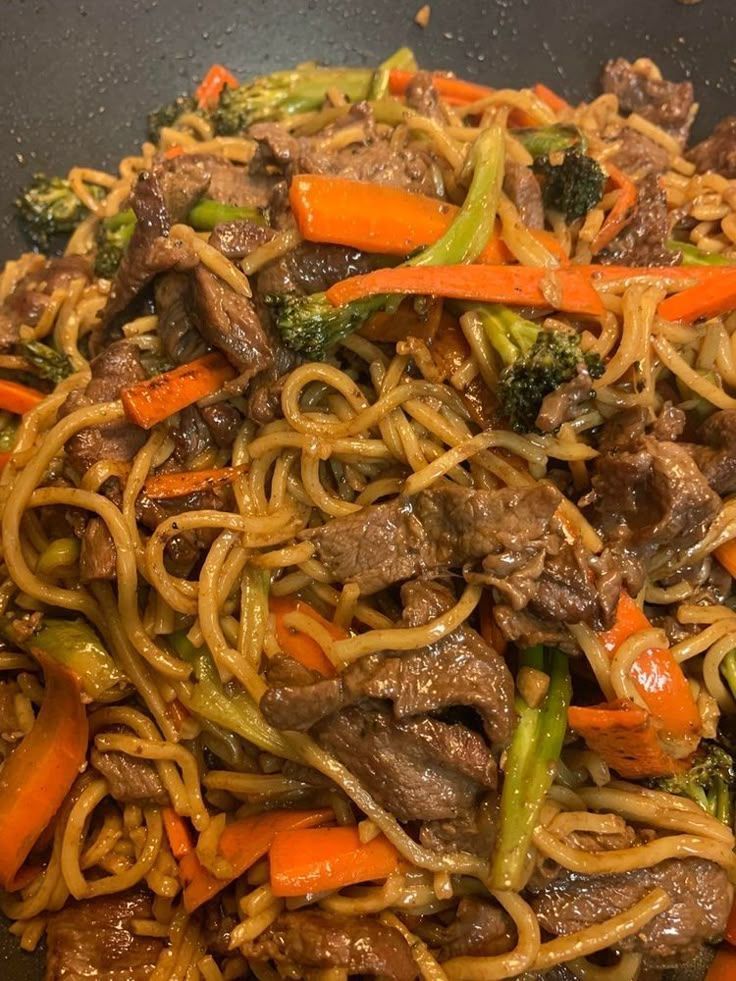
Follow these steps to whip up the chow mein:
Sauce – Mix ingredients in a small bowl then set aside. Some is used to flavour the beef, then the rest for the noodles.
Sauce thickener (cornflour slurry) – Mix the cornflour / cornstarch and water in a separate small bowl.
Prepare noodles per packet directions then drain. (I usually start the water boiling while I chop veggies, so the noodles are ready right when I need them.)
Cook beef – Heat the oil in a large non-stick pan over high heat. Add the minced garlic and cook for about 10 seconds until fragrant, then add the ground beef. Stir and break it apart as it cooks. When it’s no longer pink, stir in 1 1/2 tablespoons of the Sauce and the white parts of the green onions. Keep cooking for about 2 more minutes to get the beef nicely caramelized.
Finish sauce – Stir the cornflour slurry into the remaining sauce.
Egg – Push the beef to the side, then add the egg into the pan. Scramble it lightly and mix it through the beef. (This is a neat trick that helps the beef stick to the noodles better!)
Cabbage & carrot – Once the egg is mostly cooked, toss in the carrot batons and sliced cabbage. Stir-fry for about 1 minute, just until the cabbage starts to wilt.
Sauce & noodles – Give the sauce a quick stir and pour it over the pan. Add the bean sprouts and drained noodles. Toss everything together so the sauce coats the noodles and veggies evenly. Finally, stir in the green parts of the green onions and toss for another minute.
Serve – Divide the chow mein between bowls and serve hot!
And that’s it – a quick, one-pan dinner everyone will enjoy. The ground beef cooks in a flash and the sauce is infused deeply through each strand of noodle. Plus, stirring in those veggies at the end ensures they stay just tender-crisp, giving a great texture contrast.
Beef chow mein with ground beef, noodles, cabbage, carrots, and bean sprouts in a savory soy-based sauce.
Tips, Variations, and Storage
Noodle swaps: Traditional chow mein noodles are ideal, but this recipe is very flexible. You can use lo mein, ramen, or even spaghetti in a pinch – just make sure to use the same weight and cook them according to package directions. Once the sauce is mixed in, no one will know the difference!
Protein swaps: While ground beef adds hearty flavor, any ground meat works here. Try ground chicken, pork, turkey, or even lamb if you have it. Just keep in mind the sauce is on the beefy side of savory, so lighter meats will mostly take on the sauce flavor (and that’s perfectly fine!
Sauce details: We use both light and dark soy sauce. Light (or all-purpose) soy brings the saltiness, while a splash of dark soy sauce gives the noodles a beautiful mahogany color and deeper soy flavor. If you don’t have dark soy on hand, regular soy sauce will do—just omit the extra pinch of salt since regular soy is saltier. Oyster sauce is our umami booster; it makes the sauce rich and savory. No oyster sauce? No problem: try a vegetarian oyster sauce or a spoon of hoisin sauce for a similar sweet-savory boost.
Chinese cooking wine: This ingredient (Shaoxing wine) adds a signature flavor. If you prefer not to use alcohol, substitute both the wine and the water with low-sodium chicken stock for a similar depth.
Make-ahead: You can prep parts in advance. Slice the veggies and mix up the sauce ingredients early in the day, even up to a few hours ahead. Then it’s just a quick stir-fry when you’re ready to eat.
Storage: Leftovers store well in the fridge for 3-4 days. Keep them in an airtight container. (Tip: when reheating, sprinkle a little soy sauce or water on top so the noodles don’t dry out.) If you really want to save time, you can make the whole dish ahead and reheat it – just know that the noodles will soften a bit more over time, so this chow mein is best enjoyed within a couple of days.
Discover more
See more on the next page
Advertisement
